Skip to main navigation menu Skip to main content Skip to site footer

Volume 1, No. 1Peradaban Hukum Nusantara (PERANTARA)

DOI:https://doi.org/10.62193/qesb2912

Published 27 April 2024

Issue description

This inaugural issue of Peradaban Hukum Nusantara (PERANTARA), Vol. 1 No. 1 (2024), presents a rich spectrum of legal scholarship that explores urgent and emerging issues across various domains of law. Featured articles address challenges in juvenile rehabilitation, intergovernmental planning synergies, legal protection for online transportation drivers, and criminal law in digital contexts such as the metaverse. Additional studies offer a critical analysis of environmental legal policies related to plastic waste, limitations of state-owned enterprise obligations, the application of the death penalty under the new Criminal Code, and the legal interpretation of non-profit principles in the formation of foundation-based business entities.

Articles

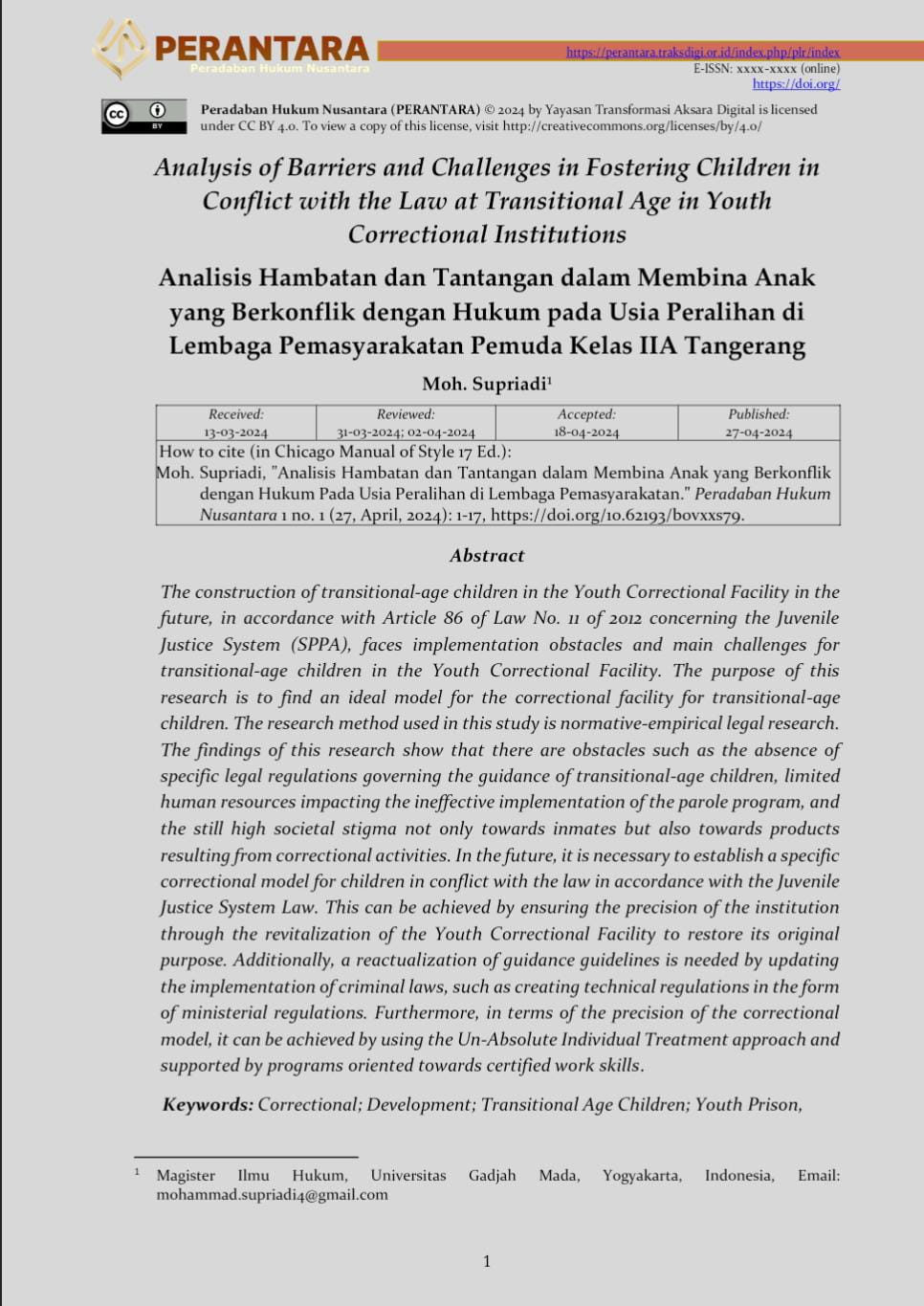
  1. Analysis of Barriers and Challenges in Fostering Children in Conflict with the Law at Transitional Age in Youth Correctional Institutions: Analisis Hambatan dan Tantangan dalam Membina Anak yang Berkonflik dengan Hukum pada Usia Peralihan di Lembaga Pemasyarakatan Pemuda Kelas IIA Tangerang

    The construction of transitional-age children in the Youth Correctional Facility in the future, in accordance with Article 86 of Law No. 11 of 2012 concerning the Juvenile Justice System (SPPA), faces implementation obstacles and main challenges for transitional-age children in the Youth Correctional Facility. The purpose of this research is to find an ideal model for the correctional facility for transitional-age children. The research method used in this study is normative-empirical legal research. The findings of this research show that there are obstacles such as the absence of specific legal regulations governing the guidance of transitional-age children, limited human resources impacting the ineffective implementation of the parole program, and the still high societal stigma not only towards inmates but also towards products resulting from correctional activities. In the future, it is necessary to establish a specific correctional model for children in conflict with the law in accordance with the Juvenile Justice System Law. This can be achieved by ensuring the precision of the institution through the revitalization of the Youth Correctional Facility to restore its original purpose. Additionally, a reactualization of guidance guidelines is needed by updating the implementation of criminal laws, such as creating technical regulations in the form of ministerial regulations. Furthermore, in terms of the precision of the correctional model, it can be achieved by using the Un-Absolute Individual Treatment approach and supported by programs oriented towards certified work skills.
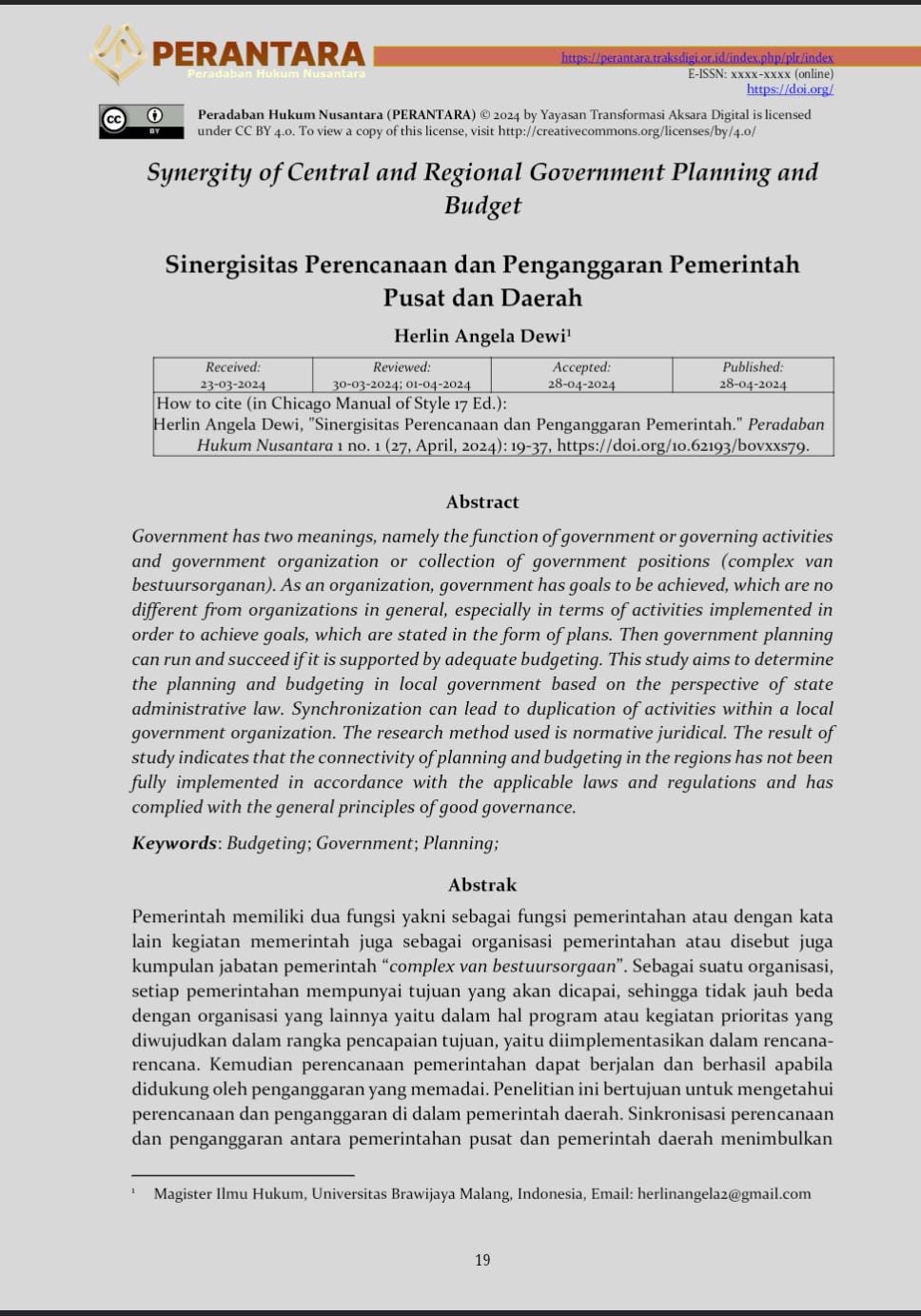
  2. Synergity of Central and Regional Government Planning and Budget: Sinergisitas Perencanaan dan Penganggaran Pemerintah Pusat dan Daerah

    Government has two meanings, namely the function of government or governing activities and government organization or collection of government positions (complex van bestuursorganan). As an organization, government has goals to be achieved, which are no different from organizations in general, especially in terms of activities implemented in order to achieve goals, which are stated in the form of plans. Then government planning can run and succeed if it is supported by adequate budgeting. This study aims to determine the planning and budgeting in local government based on the perspective of state administrative law. Synchronization can lead to duplication of activities within a local government organization. The research method used is normative juridical. The result of study indicates that the connectivity of planning and budgeting in the regions has not been fully implemented in accordance with the applicable laws and regulations and has complied with the general principles of good governance.

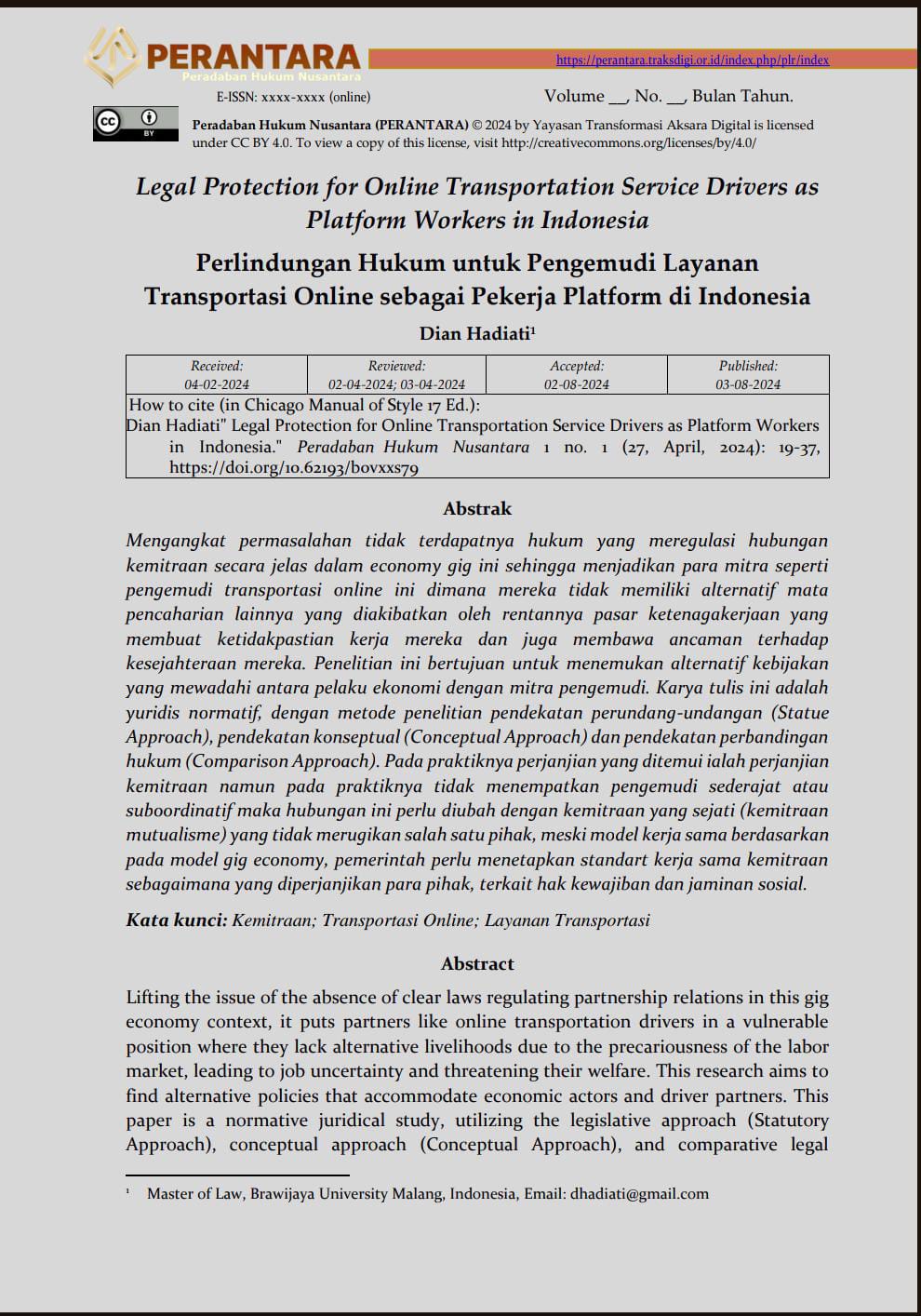
  3. Legal Protection for Online Transportation Service Drivers as Platform Workers in Indonesia: Perlindungan Hukum untuk Pengemudi Layanan Transportasi Online sebagai Pekerja Platform di Indonesia

    Lifting the issue of the absence of clear laws regulating partnership relations in this gig economy context, it puts partners like online transportation drivers in a vulnerable position where they lack alternative livelihoods due to the precariousness of the labor market, leading to job uncertainty and threatening their welfare. This research aims to find alternative policies that accommodate economic actors and driver partners. This paper is a normative juridical study, utilizing the legislative approach (Statutory Approach), conceptual approach (Conceptual Approach), and comparative legal approach (Comparison Approach). In practice, the agreements encountered are partnership agreements, but in reality, they do not place drivers on equal footing or subordinate terms. Therefore, this relationship needs to be transformed into a true partnership (mutualistic partnership) that does not disadvantage either party, even though the collaboration model is based on the gig economy model. The government needs to establish partnership cooperation standards as agreed upon by the parties, regarding rights, obligations, and social guarantees.

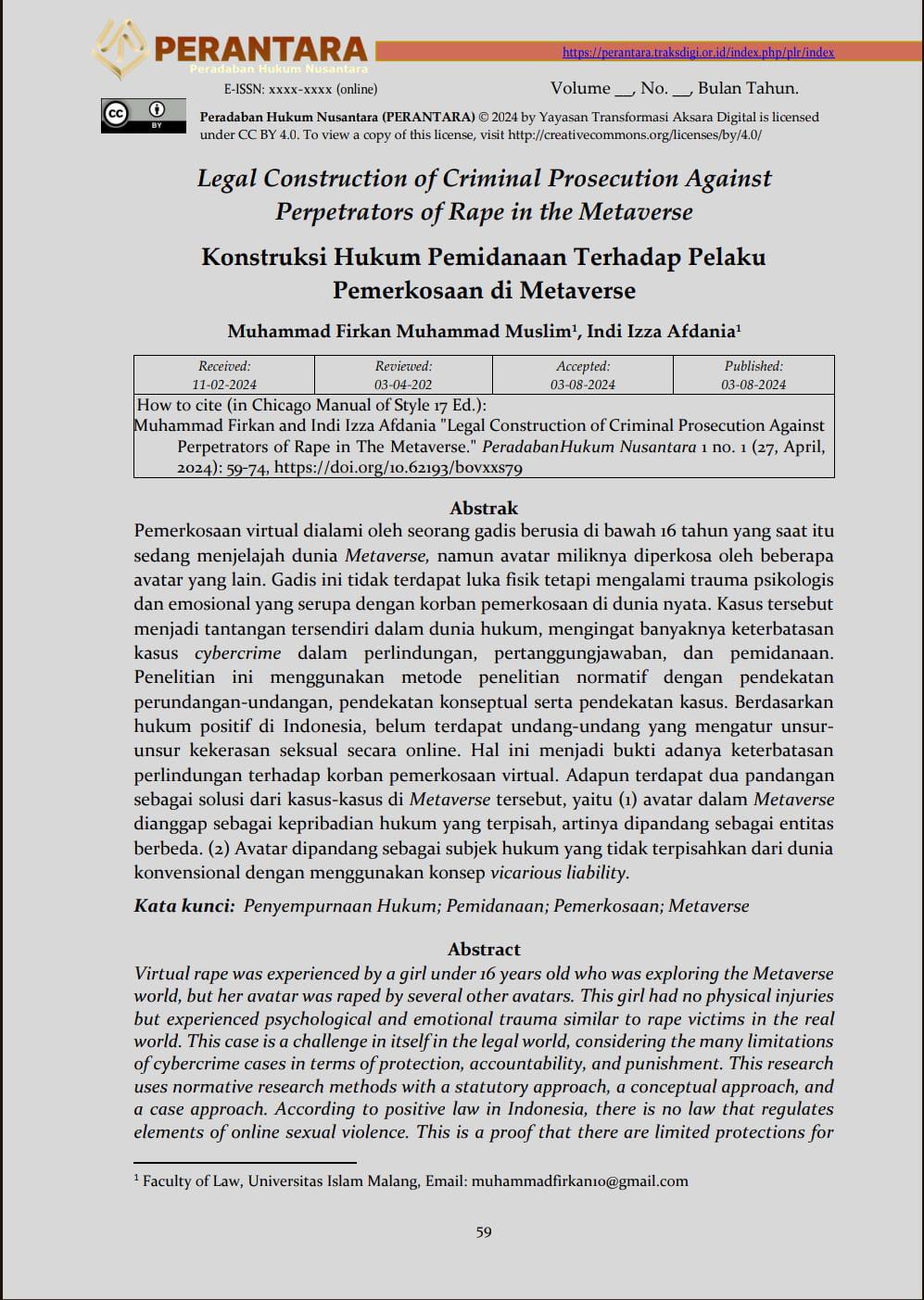
  4. Legal Construction of Criminal Prosecution Against Perpetrators of Rape in the Metaverse: Konstruksi Hukum Pemidanaan Terhadap Pelaku Pemerkosaan di Metaverse

    Virtual rape was experienced by a girl under 16 years old who was exploring the Metaverse world, but her avatar was raped by several other avatars. This girl had no physical injuries but experienced psychological and emotional trauma similar to rape victims in the real world. This case is a challenge in itself in the legal world, considering the many limitations of cybercrime cases in terms of protection, accountability, and punishment. This research uses normative research methods with a statutory approach, a conceptual approach, and a case approach. According to positive law in Indonesia, there is no law that regulates elements of online sexual violence. This is a proof that there are limited protections for virtual rape victims. There are two views as a solution to these cases in the Metaverse, namely (1) the avatar in the Metaverse is considered a separate legal personality, which means that it is seen as a different entity. (2) Avatars are seen as legal subjects that cannot be separated from the conventional world by using the concept of vicarious liability.

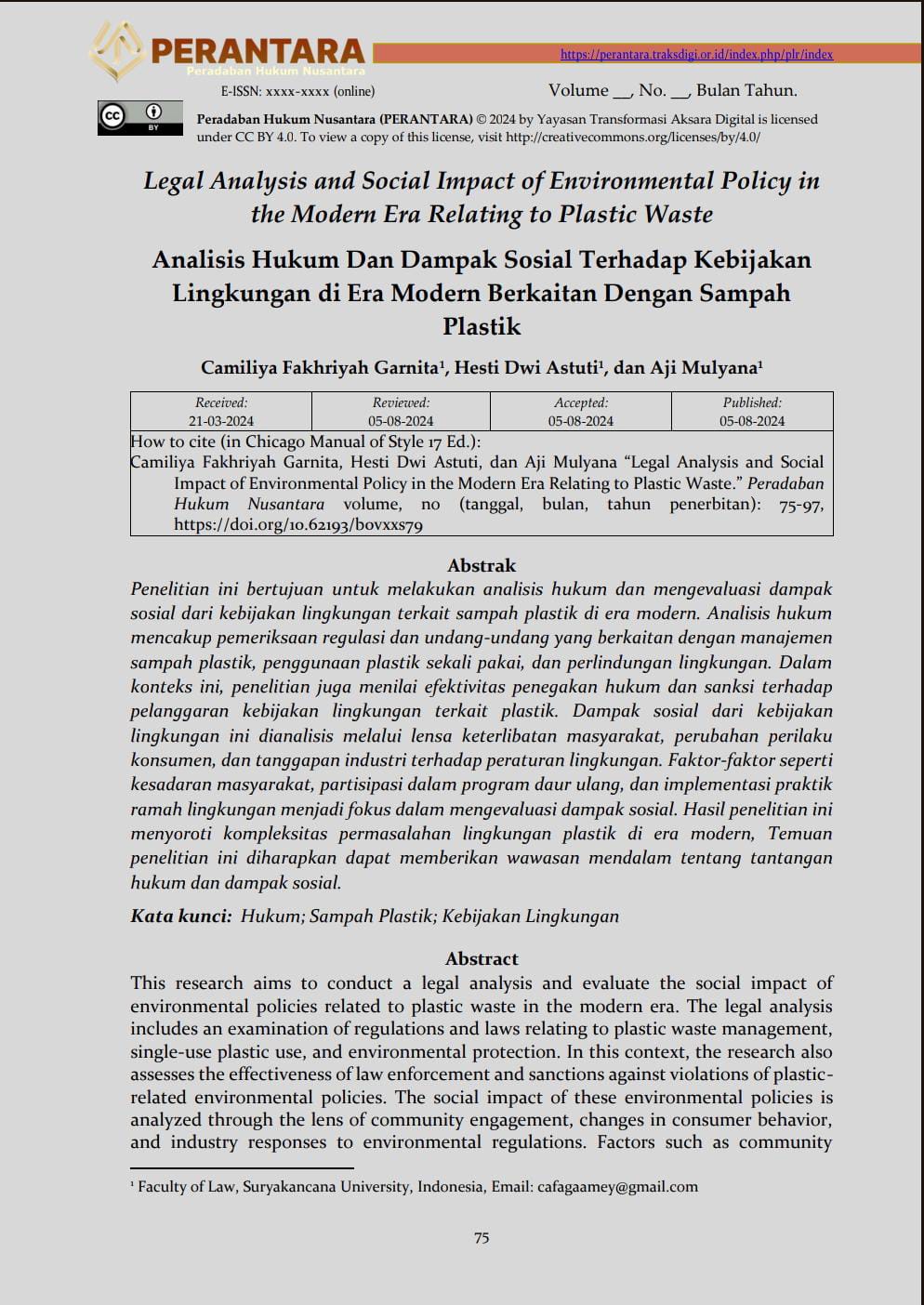
  5. Legal Analysis and Social Impact of Environmental Policy in the Modern Era Relating to Plastic Waste: Analisis Hukum Dan Dampak Sosial Terhadap Kebijakan Lingkungan di Era Modern Berkaitan Dengan Sampah Plastik

    This research aims to conduct a legal analysis and evaluate the social impact of environmental policies related to plastic waste in the modern era. The legal analysis includes an examination of regulations and laws relating to plastic waste management, single-use plastic use, and environmental protection. In this context, the research also assesses the effectiveness of law enforcement and sanctions against violations of plastic-related environmental policies. The social impact of these environmental policies is analyzed through the lens of community engagement, changes in consumer behavior, and industry responses to environmental regulations. Factors such as community awareness, participation in recycling programs, and implementation of environmentally friendly practices are the focus in evaluating social impact. The results of this study highlight the complexity of plastic environmental issues in the modern era, The findings of this study are expected to provide in-depth insights into legal challenges and social impacts.

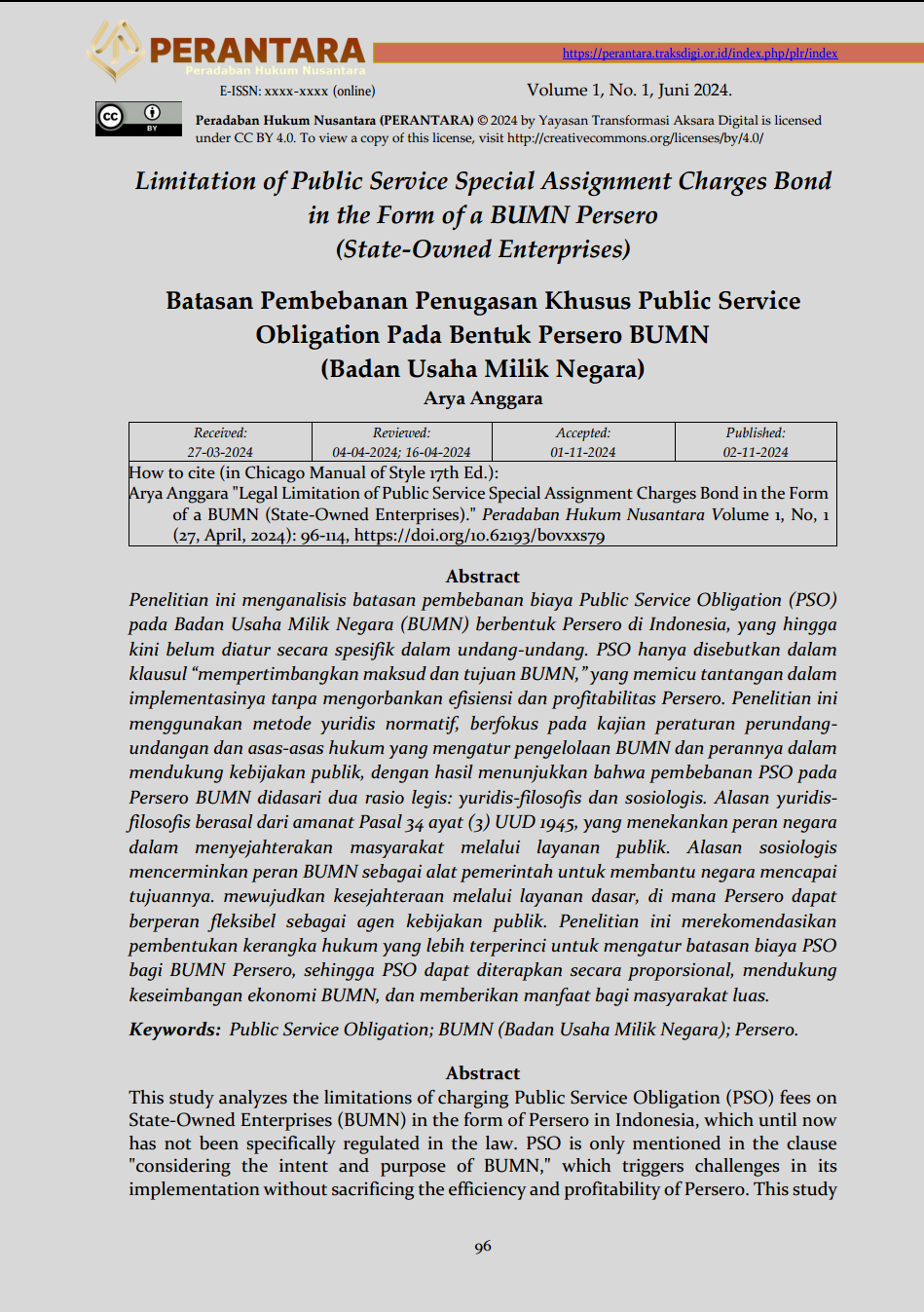
  6. Limitation of Public Service Special Assignment Charges Bond in the Form of a BUMN Persero (State-Owned Enterprises): Batasan Pembebanan Penugasan Khusus Public Service Obligation Pada Bentuk Persero BUMN (Badan Usaha Milik Negara)

    This study analyzes the limitations of charging Public Service Obligation (PSO) fees on State-Owned Enterprises (BUMN) in the form of Persero in Indonesia, which until now has not been specifically regulated in the law. PSO is only mentioned in the clause "considering the intent and purpose of BUMN," which triggers challenges in its implementation without sacrificing the efficiency and profitability of Persero. This study uses a normative legal method, focusing on the study of laws and regulations and legal principles governing the management of BUMN and its role in supporting public policy, with the results showing that the imposition of PSO on BUMN Persero is based on two legal ratios: legal-philosophical and sociological. The legal-philosophical reason comes from the mandate of Article 34 paragraph (3) of the 1945 Constitution, which emphasizes the role of the state in improving the welfare of the community through public services. The sociological reason reflects the role of BUMN as a government tool to help the state achieve its goals. realizing welfare through basic services, where Persero can play a flexible role as an agent of public policy. This study recommends the establishment of a more detailed legal framework to regulate PSO cost limits for BUMN Persero, so that PSO can be implemented proportionally, support the economic balance of BUMN, and provide benefits to the wider community.

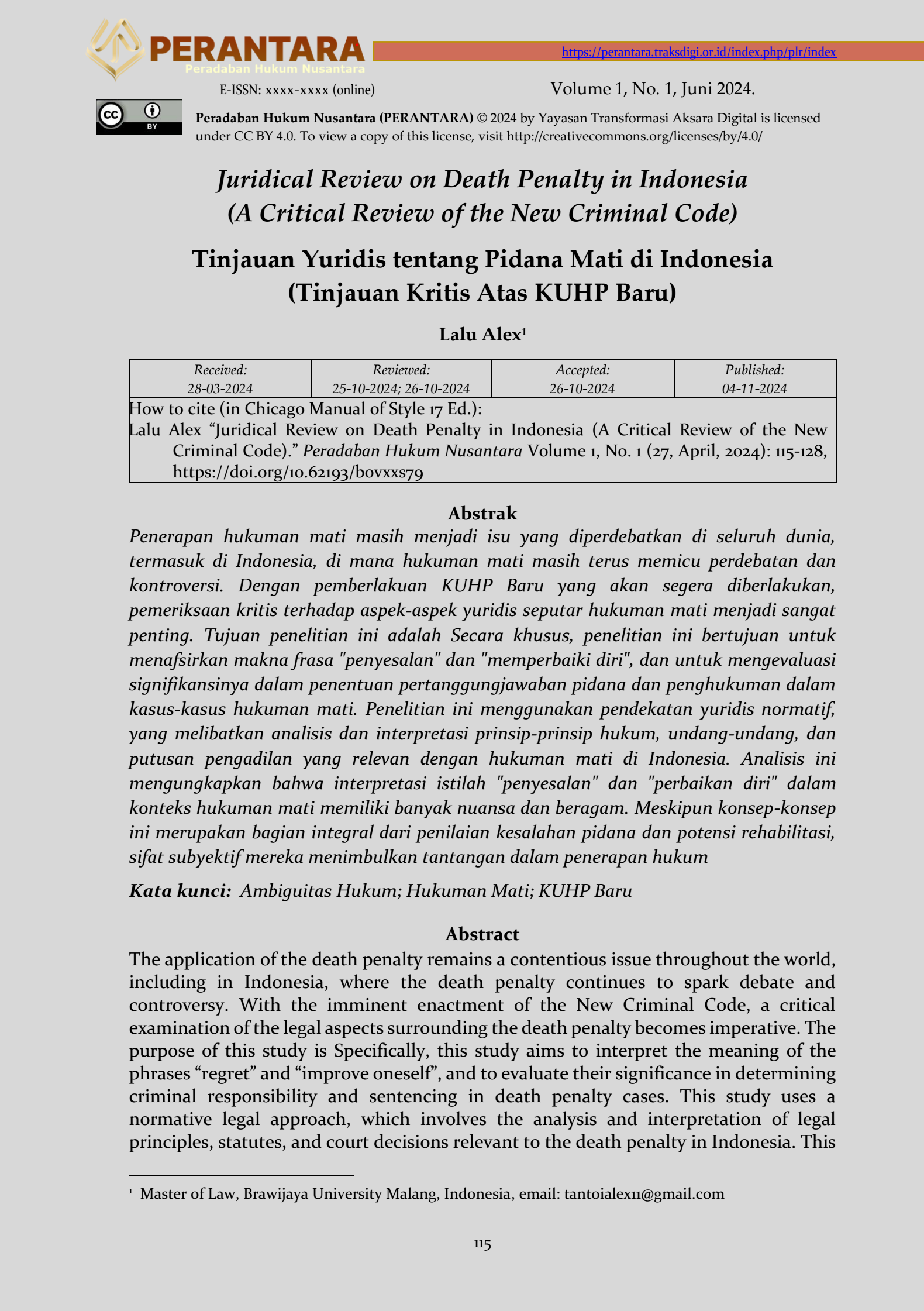
  7. Juridical Review on Death Penalty in Indonesia (A Critical Review of the New Criminal Code): Tinjauan Yuridis tentang Pidana Mati di Indonesia (Tinjauan Kritis Atas KUHP Baru)

    The application of the death penalty remains a contentious issue throughout the world, including in Indonesia, where the death penalty continues to spark debate and controversy. With the imminent enactment of the New Criminal Code, a critical examination of the legal aspects surrounding the death penalty becomes imperative. The purpose of this study is Specifically, this study aims to interpret the meaning of the phrases “regret” and “improve oneself”, and to evaluate their significance in determining criminal responsibility and sentencing in death penalty cases. This study uses a normative legal approach, which involves the analysis and interpretation of legal principles, statutes, and court decisions relevant to the death penalty in Indonesia. This analysis reveals that the interpretation of the terms “regret” and “improve oneself” in the context of the death penalty is nuanced and diverse. Although these concepts are integral to the assessment of criminal culpability and potential for rehabilitation, their subjective nature poses challenges in the application of the law

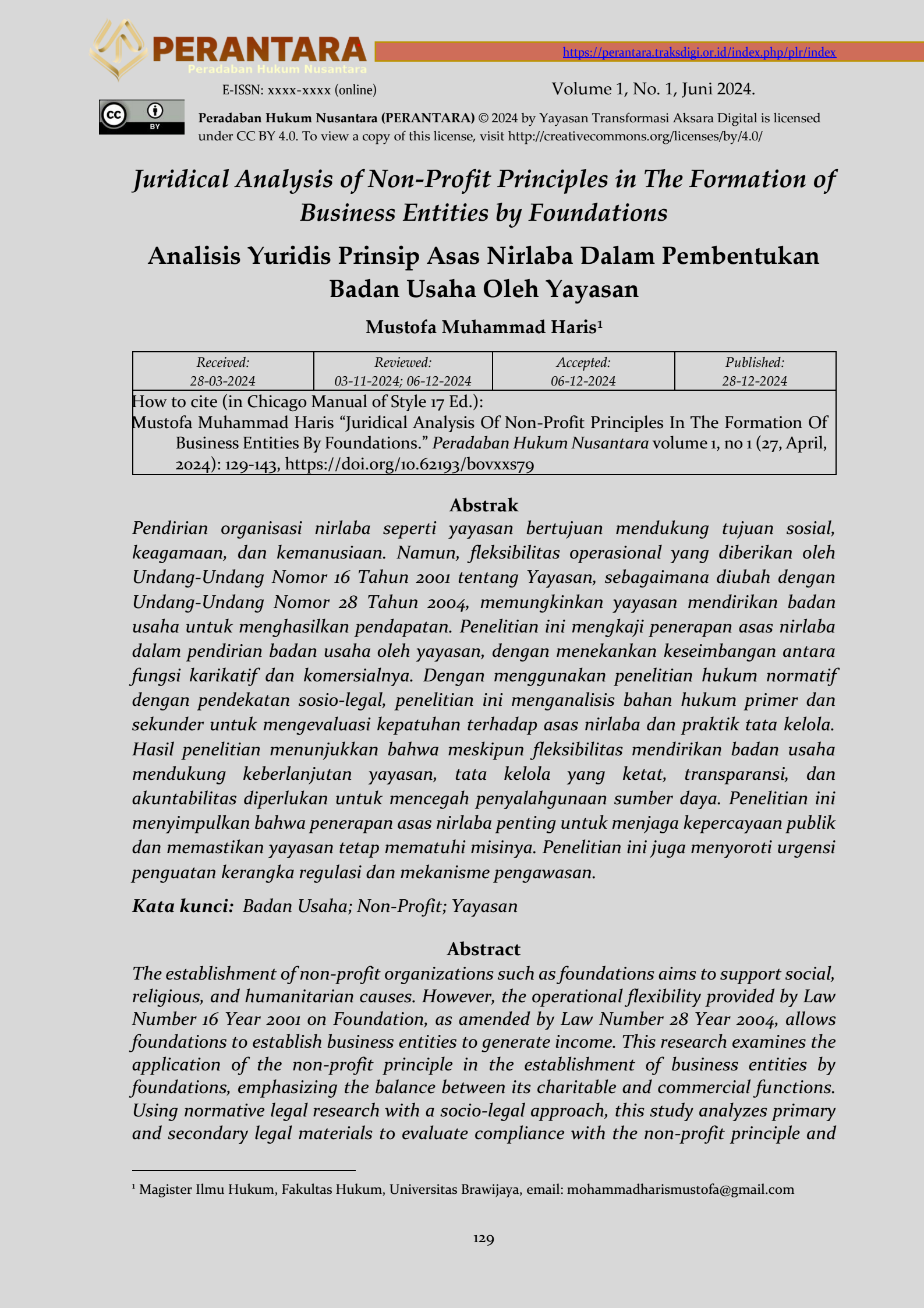
  8. Juridical Analysis of Non-Profit Principles in The Formation of Business Entities by Foundations: Analisis Yuridis Prinsip Asas Nirlaba Dalam Pembentukan Badan Usaha Oleh Yayasan

    The establishment of non-profit organizations such as foundations aims to support social, religious, and humanitarian causes. However, the operational flexibility provided by Law Number 16 Year 2001 on Foundation, as amended by Law Number 28 Year 2004, allows foundations to establish business entities to generate income. This research examines the application of the non-profit principle in the establishment of business entities by foundations, emphasizing the balance between its charitable and commercial functions. Using normative legal research with a socio-legal approach, this study analyzes primary and secondary legal materials to evaluate compliance with the non-profit principle and governance practices. The results show that although the flexibility of establishing a business entity supports the sustainability of the foundation, strict governance, transparency, and accountability are required to prevent misuse of resources. The research concludes that the application of the non-profit principle is important to maintain public trust and ensure the foundation remains true to its mission. The research also highlights the urgency of strengthening the regulatory framework and oversight mechanisms.